Showing posts with label Technical. Show all posts

Electrical Connections

28 February 2009

To connect your Zumo or any other electrical device requiring a switched power supply, you can tap into the CAN-Bus connector on the 'tank'.


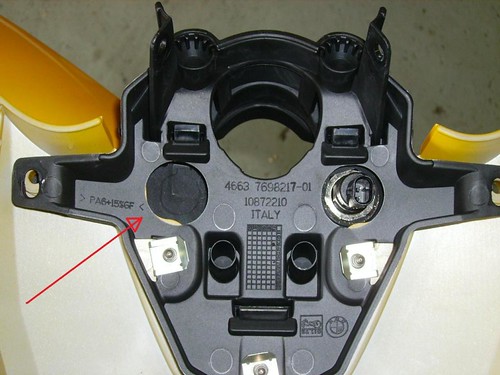
To get under the fake tank, you need to remove the seat and six torx bolts. Four on the top tank panel, and two either side of the headstock, mounted in the black plastic that forms part of the ignition/socket assembly:
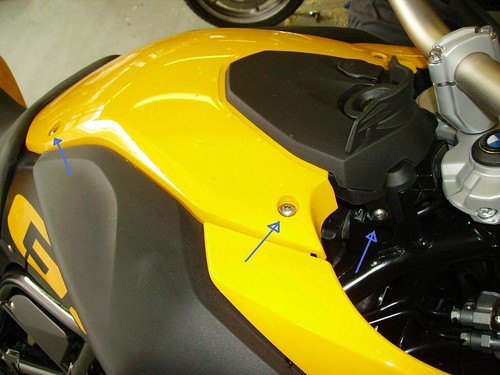


The tank panel now lifts straight off but be careful of the power socket wiring underneath:
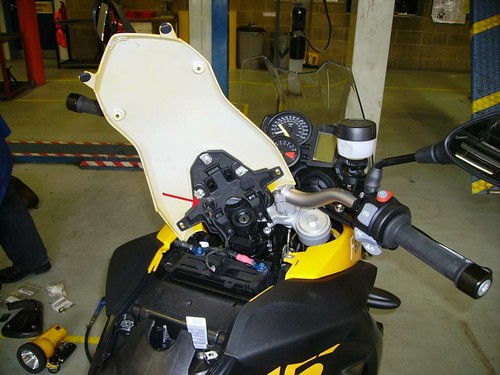


A closer look at the power socket wiring connector:
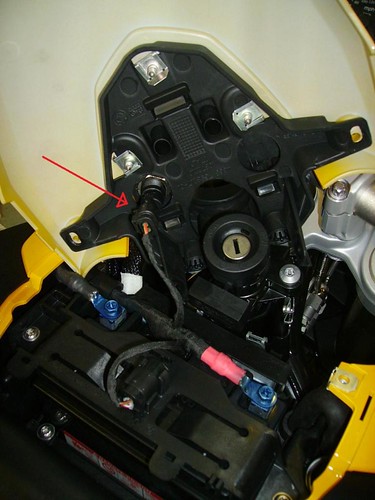


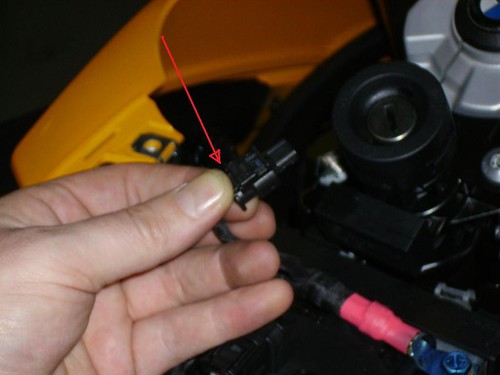
The wires are attacked with a spring clip. You have to press down with your thumb to release it, then pull straight off the socket:


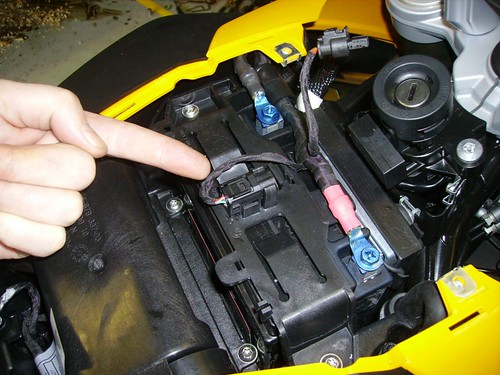
Ooh look, what is this mysterious black box thing attached directly on top of the battery? Notice as well the space between the battery and the airbox. This vertical gap will accomodate the newer Autocom units. Or a secret supply of currency.


Pull it out of the mounting clips, and remove the black cap. There is another spring clip holding the black cap on. And inside? This:
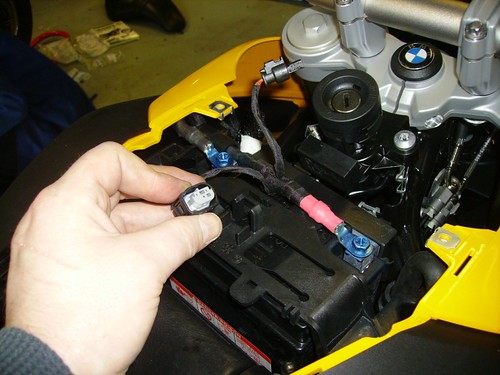


Which is our very obviously placed GPS connector. To connect your GPS unit to this can-bus controlled switched supply that stays on for a few minutes when you turn the engine off, you will need part number 80 00 0 611 656 (UK) or 83 30 0 413 585 (US - can someone verify please?) from your friendly local BMW Dealer:


You could buy the cable ready-made from Touratech if you don't want to butcher your original cable.


CAN-Bus Ready Made Cable
from Touratech


Alternative Options:


You could wire your Zumo directly back to the battery with an in-line fuse. You can buy the ready made cable from touratech:


Or you could wire your cable to a DIN plug and plug it into the DIN accessory socket next to the ignition. The plug cost around £3, but you can buy a ready-made cable from touratech:


Other Electrical Connections:


NOTE: Powerlet and BMW/DIN sockets are the same size, and the plugs are interchangeable. They are the same thing. Cigar sockets & plugs are bigger, like the one in your car.


You can add an additional accessory socket to the right of the ignition key and power it from the CAN-Bus connector. There is a cut-out on the underside of the 'tank' panel to show where to place the additional socket You do not need an in-line fuse for CAN-Bus connections.


You can buy a socket kit ready-made to plug into the CAN-Bus from Powerlet


CAN-Bus can support up to 5amps, so electrical devices with a greater power draw (such as a heated jacket perhaps) will need an accessory socket. You could wire an additional accessory socket (BMW/DIN/Powerlet or cigar lighter size) to the right of the ignigition key (see picture above) and wire it back to the battery directly - this supply would not switch off with the ignition. You will need an in-line fuse between the socket and the battery.


You can buy a socket kit for the fake-tank cut-out, ready-made with inline fuse to wire directly back to the battery from Powerlet.

You can also buy handle-bar mounted sockets to wire back to the battery.

Touratech do a full dashboard for the 800GS/650GS(Twin) that includes an additional accessory socket.


Powerlet do a full range of Powerlet sockets and plugs, as well as Cigar sockets & plugs and SAE 2-pin connectors.

They also do adapters beween the different plug types.


Also a full range of power cables to power your iPod, radar detector, USB, heated clothing etc. from a Powerlet socket.


Finally, if you have several devices to wire back to the battery you might consider a fuse panel, like the one AP-1 Centech Fuse Panel from Nippy Norman in the UK


This little box means only one connector to the battery, then you can quickly add wires to the box and each line is fused, meaning no need for in-line fuse.


Hope this helps someone.


Read more...

Tyre FAQ

Talk about tyre pressures, tubes, rim locks and puncture repairs.


Wheel Specs:

Rim, front 2.15 x 21"
Rim, rear 4.25 x 17"

Tyres, front 90/90 - 21 54V
Tyres, rear 150/70 - 17 69V


What pressures should I run my tyres at?


For stock tyres:

FRONT one-up: 2.2bar/32psi at 20 degrees celcius
FRONT two-up and/or with luggage: 2.5bar/36psi at 20 degrees celcius

REAR one-up: 2.5bar/36psi at 20 degrees celcius
REAR two-up and/or with luggage: 2.9bar/42psi at 20 degrees celcius

A quick internet search will throw up correct pressures for alternative tyres. 2.2front/2.5rear seems to be common. On the road I quite liked 2.5front/2.9rear only one-up on the stock Battlewings.


Can I use Tubeless Tyres on the 800GS?

Yes, Tubeless tyres (TL) are fine. So are tube-type (TT) tyres. See Chart above. But either way you will still need a tube (see rim sizes above).

That's because the wheels have spokes and air will leak out if you don't have a tube. The 1200GS has special spoke that go to the side of the wheel so their owners can use tubeless tyres - you can't on your 800GS.


Do I need Rim Locks?

Probably not, unless you're planning to do the Paris-Dakar on the 800GS in which case you should know a lot more about tyres and tubes already.


How do I check pressures at 20 degrees celcius?

Set the climate control in your garage to 20 degrees celcius and only ever check your pressure in there.

OR...bear in mind that a change of 10 degrees celcius is equivalent to a change of about 0.07bars or 1psi. So on a near freezing day increase pressure by about 0.14bars/2psi or on a very hot Death Valley kind of day reduce pressure by 0.14bars/2psi. This applies to 'cold' tyres that haven't been ridden on recently, I have no idea how hot your tyres will be after a few trails.


Should I reduce pressures when off-roading?

If you're going on sand, gravel or very gloopy mud you can maybe lose 5psi/0.4bars but much less and you risk 'tyre slip' where the wheel spins but the tyre doesn't. This will result in the tube valve being ripped out and sudden deflation. You could deflate more and use rim locks (see above).

Put it this way: the BMW Off-Road schools runs their 800GSs off road at road pressures. 'nuff said.


If I want to repair a puncture out on the trails, what tools will I need?


  • 22mm socket for front axel

  • 24mm socket for rear axel

  • a wrench for the sockets

  • Torx keys for M8 and M10 torx bolts (front axel clamps and front brake calliper)

  • Tork key for the ABS sensor if you are clumsy and might knock it when removing/replacing wheel

  • A centre stand (or lie the bike down)

  • A large rock/block to go under the engine when you want to remove the front wheel on the centre stand (or lie the bike down)

  • Tyre levers (two or three, depends how good you are)

  • Rim protectors or bits of plastic bottle (so you don't scratch the rims, depends how precious about your bike you are)

  • A bead breaker (or thick heavy boot heal)

  • Some 4"X4" or something to rest the wheel rim on while you break the bead with your boot, or you will knacker the sprocket/brake discs. Or you can dig a hole in the dirt.

  • Valve removal tool (to take the valve out of the valve stem to deflate the tube enough to get it out)

  • A little spanner (wrench) to remove the lock nut on the valve stem

  • A puncture repair kit (patches/glue) or a spare tube

  • A inflation device (CO2 cartridges, electric compressor or hand pump)

  • Some prior knowledge of how to repair a puncture. Best to practice at home before you need to do it for real.

Good grief thats a lot of stuff for a puncture? Isn't there any easier way?

Yeah. Push bike to nearest road. Phone BMW assist.


Har Har. Can't I just plug the tyre?

No, its got a tube, remember? Should have bought the 650GS.


What about tyre sealant? Can I use that?

Bit late once you have a puncture. There are special formula sealants for tubed tyres. Messy stuff though, and it won't work on gashes or big punctures, but it will gloop everything up and make the tube irrepairable. Also, a small nail in the tyre can cause a large rip in the tube as the tube 'squirms' inside the tyre at speed.


Any other advice?

Practice repairing punctures at home, until you are confident about removing wheels and tyres. Learn how to fix these things in your garage at home when its easy to get help. Once it is second nature, out on the trails it won't be an issue for you.

Oh, and make sure your riding partner has a spare inner tube also. If he gets a puncture and takes your spare, you can guarantee you will get a puncture a mile later. And you can guarantee he won't take your spare off his wheel now...


Read more...

Tyre Options

Wheel Specs:


Rim, front 2.15 x 21"
Rim, rear 4.25 x 17"

Tyres, front 90/90 - 21 54V
Tyres, rear 150/70 - 17 69V


BMW Recommended Tyres:


Road Bias:

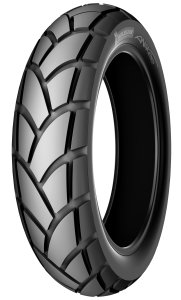
Front: Michelin Anakee, 90/90-21 M/C TL/TT (54V)
Rear: Michelin Anakee C, 150/70 R17 M/C TL/TT (69V)


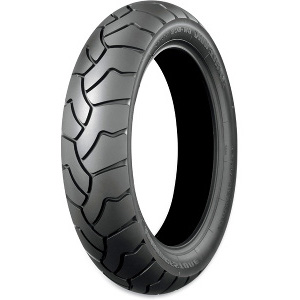
Front: Bridgetstone Battlewing 501 G, 90/90-21 M/C TL/TT (54V) COMES AS STOCK
Rear: Bridgestone Battlewing 502 G, 150/70 R17 M/C TL/TT (69V) COMES AS STOCK


Off-Road Bias:

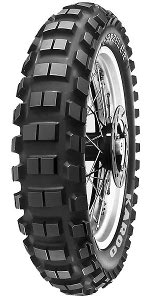
Front: Metzler Karoo (T) Front, 90/90-21 M/C TL (54Q)* M+S
Rear: Metzler KAroo (T), 150/70 -17 M/C TL (69Q)* M+S


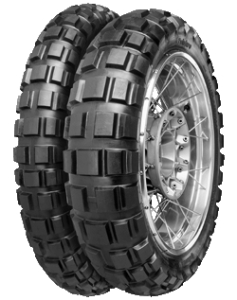
Front: Continental Twinduro TKC80, 90/90-21 M/C TL (54Q)* (Not manufacturered yet, go for the 90/90 54T model at present)
Rear: Continental Twinduro TKC80, 150/70 B17 M/C TL (69Q)*


* These tyres are rated Q (160km/h or 99mp/h) instead of V but can be used if "the permissable top speed is indicated by readily visible means (e.g. sticker affixed in the rider's field of vision)".


Tyres not mentioned by BMW:

The load index & size matches with slightly reduced speed rating are:


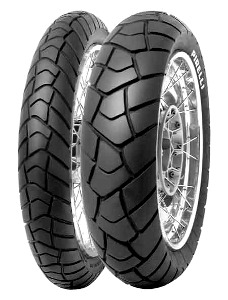
Front: Pireli Scorpion MT90 A/T 90/90 -21 TL 54V M/C
Rear: Pirelli Scorpion MT 90 S/T 150/70 R17 TL 69H


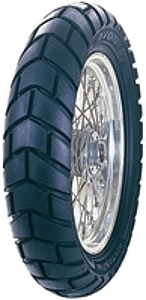
Front: Avon Distanzia AM43 90/90 -21 TL 54T
Rear: Avon Distanzia AM 44 150/70 R17 TL 69V


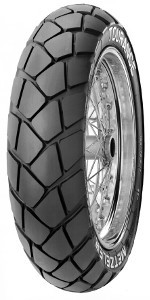
Front; Metzeler Tourance 90/90 -21 TL 54H M/C
Rear: Metzeler Tourance 150/70 R17 TL 69V


Front: Heidenau 90/90 - 21 M/C TL 54H K 60
Rear: Heidenau 150/70 B17 M/C 69T TL K60

TKC80 style tyre


Front: Heidenau 90/90 - 21 M/C TL 54H K 76
Rear: Heidenau 150/70 - 17 M/C TL 69H K 76

Tourance - style tyre


Edit 23/6/09:
Conti now have the ContiTrailAttack available:


Front: 90/90 - 21 M/C 54 H TL
Rear: 150/70 R 17 M/C 69 V TL

Recommended pressures are 2.5/2.5 or 36psi/36psi


Read more...

About This Blog

I had been saving for a ST1300 for a long time, as it was clear that my Deauville wasn't up the task.

In November 2007 I saw pictures of the F800GS and ran to the dealers to place a deposit.

On 13th March 2008 I took delivery and have never regretted it.

On 13th April 2009 my 800GS joined me in Singapore for a new life and adventures...

This is my F800GS Blog.

Followers

  © Blogger templates Newspaper by Ourblogtemplates.com 2008

Back to TOP